Swiss Licensing Frameworks Directing Game Provider Tactics for Mobile Live Dealer Adherence
Felix Frank · Sep 13, 2026
Swiss Licensing Frameworks Directing Game Provider Tactics for Mobile Live Dealer Adherence
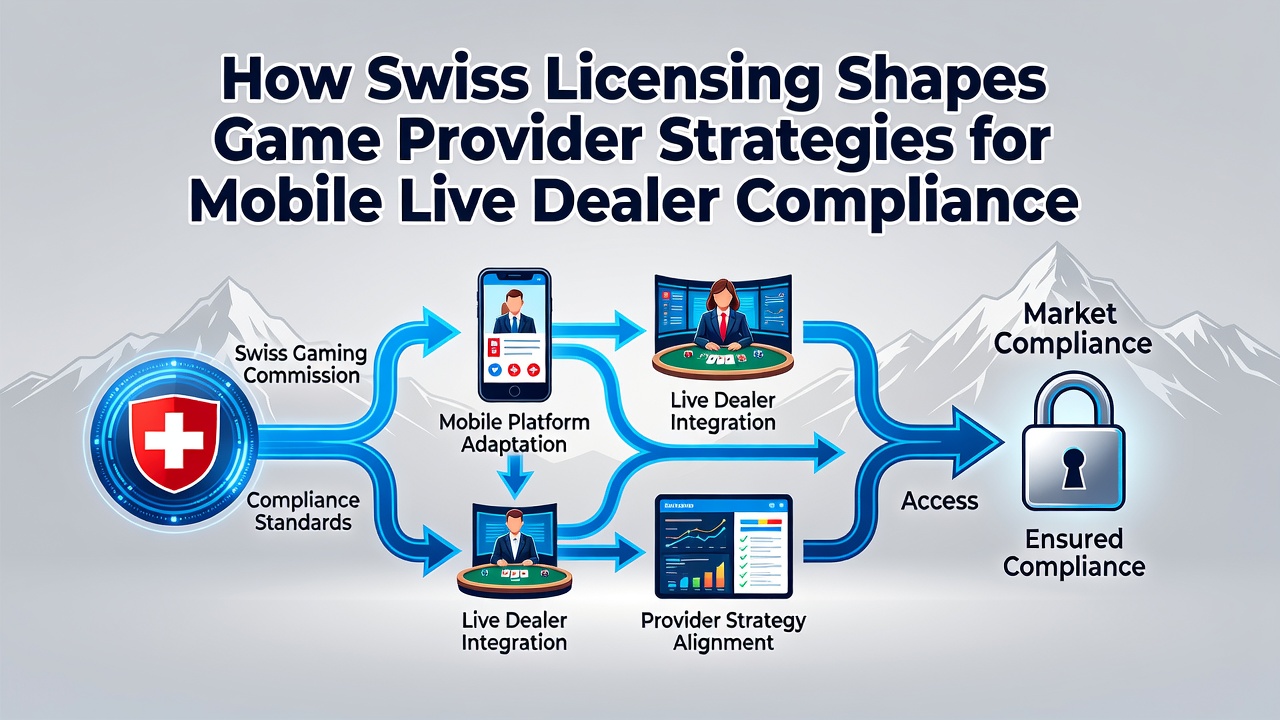
Swiss licensing requirements establish clear boundaries that game providers must navigate when developing mobile live dealer solutions, and these rules emphasize player protection alongside technical reliability. The Federal Act on Gambling, administered through bodies such as teh Swiss Federal Gaming Board, mandates that operators secure domestic licenses before offering live dealer games on mobile platforms, which in turn shapes how providers design their software architectures and streaming protocols. Providers respond by embedding geo-location verification systems directly into mobile applications, ensuring that access remains restricted to Swiss territory while maintaining seamless session continuity.
Core Licensing Conditions and Their Technical Implications
Under Swiss regulations, live dealer environments require continuous video streams with defined latency thresholds, encrypted data transmission, and real-time monitoring tools that log every player interaction, and these standards force providers to allocate resources toward robust server infrastructure located within approved jurisdictions. Data from regulatory filings shows that providers investing in redundant mobile-optimized delivery networks achieve faster approval cycles, whereas those relying on general-purpose platforms encounter repeated audit delays. Game providers therefore integrate Swiss-specific APIs for identity verification and spending limit enforcement at the software development stage rather than retrofitting them later.
Mobile Platform Adaptations Driven by Compliance Needs
Providers adapt their mobile live dealer offerings to meet Swiss expectations around device compatibility and session security, and this includes supporting a wide range of operating systems while enforcing strict authentication flows before any game round begins. Observers note that many companies now deploy progressive web app frameworks that allow updates without full app-store resubmission, thereby accelerating response times to new regulatory guidance issued in 2026. As of September 2026, updated technical guidelines emphasize enhanced biometric checks on mobile devices, prompting several providers to partner with Swiss-certified security firms for integration testing.
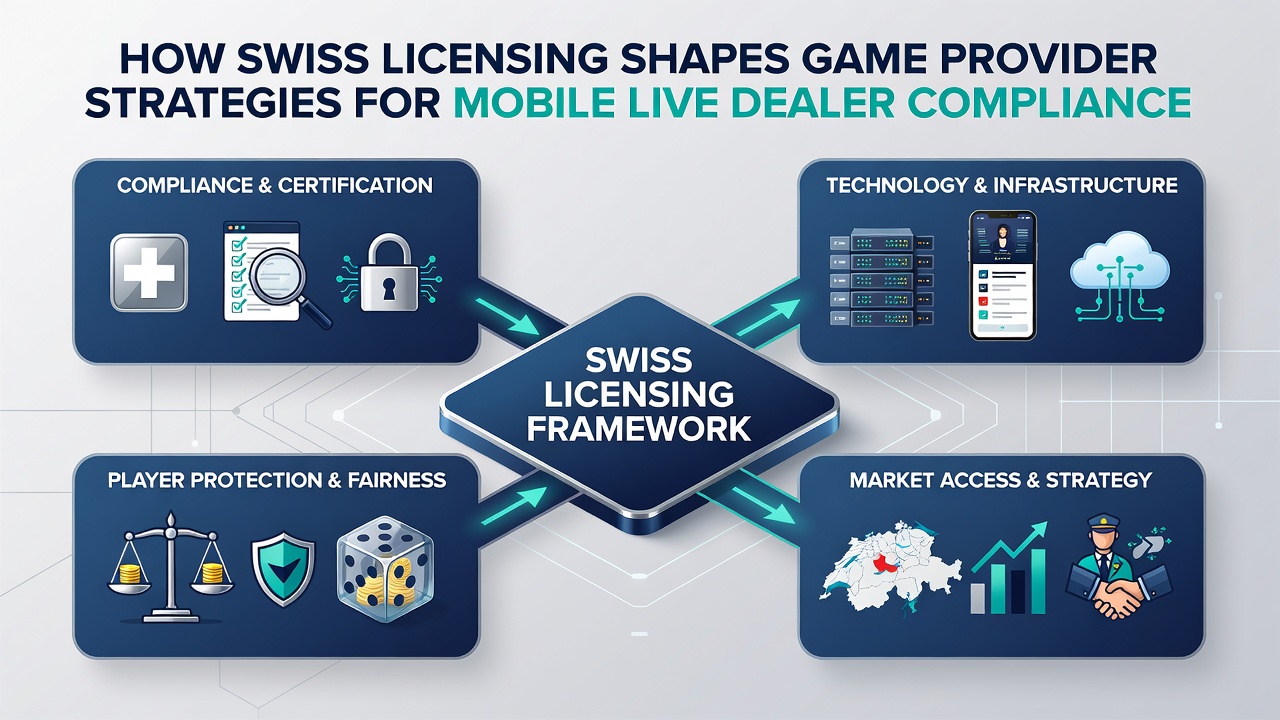
These partnerships allow providers to demonstrate compliance through third-party certifications that satisfy licensing board reviews without lengthy in-house validation processes. Research indicates that such collaborative approaches reduce time-to-market by several months compared with independent development paths.
Strategic Shifts Among Game Providers
Providers adjust product roadmaps to prioritize features that align with Swiss licensing criteria, and this often means embedding responsible gaming tools such as reality checks and self-exclusion mechanisms directly into the mobile interface. Companies that have studied successful license applications report focusing on transparent reporting dashboards that regulators can access in real time, which in turn influences internal data architecture decisions. One documented case involves a European provider that restructured its entire mobile live dealer suite after initial licensing feedback highlighted gaps in cross-device synchronization, resulting in a redesigned backend that now serves multiple regulated markets.
Industry reports from the European Gaming and Betting Association highlight how Swiss standards encourage modular software design, allowing providers to toggle jurisdiction-specific modules without rebuilding core systems. This modularity supports efficient scaling while preserving compliance integrity across different regulatory environments.
Examples of Provider Responses in Practice
Take one provider that introduced Swiss-compliant mobile live blackjack tables in early 2026 and subsequently expanded its offering to include localized language support and currency handling, all while maintaining a single codebase through configurable compliance layers. Another firm collaborated with academic researchers at a Swiss technical university to validate its random number generator integration within live dealer streams, producing peer-reviewed documentation that expedited subsequent licensing submissions. These examples illustrate how licensing requirements translate into concrete development priorities rather than abstract guidelines.
Conclusion
Swiss licensing continues to steer game provider strategies toward integrated compliance features in mobile live dealer products, and ongoing regulatory refinements will likely sustain this pattern of proactive adaptation. Providers that embed these requirements early in their development cycles position themselves for smoother market entry and sustained operational approval.