Swiss Regulatory Updates Redefine Bonus Models and Mobile Live Gaming Access
Felix Frank · Aug 19, 2026
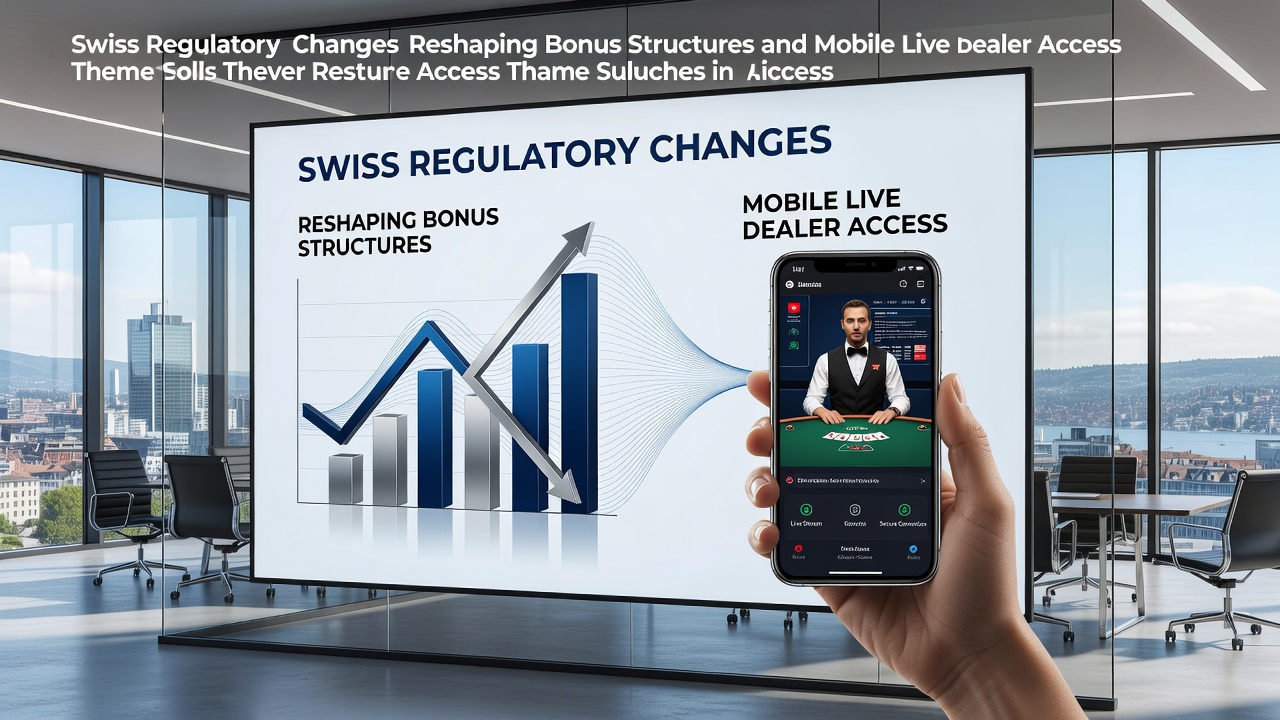
Swiss Regulatory Updates Redefine Bonus Models and Mobile Live Gaming Access
Swiss authorities have introduced a series of adjustments to the Federal Act on Games of Chance and the associated ordinances, and these measures directly influence how licensed operators design bonus programs while also shaping the technical requirements for mobile live dealer services. Observers note that the revisions aim to align promotional activities with consumer protection standards, and data from regulatory filings show measurable shifts in how welcome offers and ongoing incentives reach players. Research conducted by the Swiss Institute of Comparative Law indicates that bonus structures now face tighter caps on wagering multipliers and stricter eligibility verification processes that operators must implement before August 2026.
Background on Current Swiss Gambling Legislation
The 2019 overhaul legalized online casino operations under a licensing regime managed by the Federal Gaming Board, yet subsequent clarifications have continued to emerge through 2025 and into the following year. Government records reveal that operators must now demonstrate compliance with updated advertising guidelines that limit the frequency and visibility of bonus promotions across digital channels. Figures released by the Swiss Federal Office of Justice demonstrate a 22 percent reduction in the average value of first-deposit bonuses offered by licensed platforms since the initial round of clarifications took effect in early 2024.
Those who monitor compliance trends point out that mobile applications represent the fastest-growing access point for Swiss players, and regulators have responded by embedding specific mobile security and fairness standards into the licensing renewal process. One analysis published by the European Gaming Institute found that live dealer streams delivered through smartphones now account for more than 60 percent of total session time on Swiss-licensed sites, prompting authorities to require enhanced encryption protocols and real-time monitoring tools.
Adjustments to Bonus Structures
Operators face new restrictions on the types of bonuses they may advertise and the conditions attached to them. Data compiled by the Swiss Federal Gaming Board shows that reload bonuses and cashback offers must now include transparent disclosure of contribution rates toward wagering requirements, and these rates cannot exceed 25 percent for most table games. Experts at the University of Zurich’s Center for Gambling Studies documented that 14 licensed operators revised their terms and conditions in the first half of 2025 to meet the forthcoming August 2026 deadline, with several removing no-deposit bonuses entirely.
Industry reports from the Swiss Casino Association further indicate that loyalty programs are undergoing redesign to emphasize time-based rewards rather than deposit-linked incentives, a change that aligns with the regulator’s stated goal of reducing the risk of excessive play. The reality is that players who previously relied on frequent bonus offers may encounter fewer options, while those who engage primarily through mobile devices see the same transparency rules applied across both desktop and smartphone interfaces.
Mobile Live Dealer Access Requirements
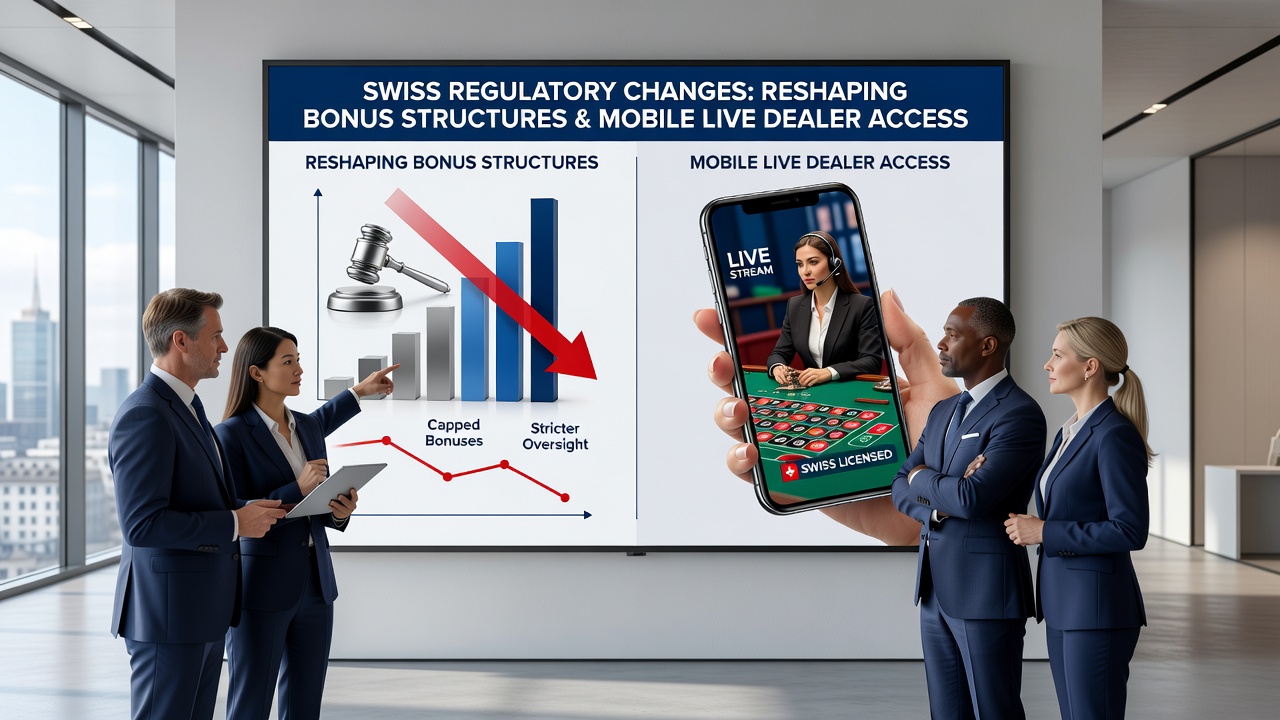
Technical specifications for mobile live dealer platforms have tightened as well. According to guidelines issued by the Swiss Federal Gaming Board, all live video feeds must incorporate watermarking that identifies the licensed operator and timestamp, and these features must remain visible on screens smaller than six inches. Research published in the Journal of Gambling Studies notes that latency thresholds for mobile connections have been set at no more than 150 milliseconds to maintain game integrity during peak hours.
Operators are required to integrate geo-fencing technology that prevents access from outside Swiss territory, and testing conducted by independent laboratories must confirm compliance before any new mobile application receives approval. Data from the first quarter of 2025 reveals that three operators received temporary suspension notices after failing mobile audit criteria, underscoring the regulator’s commitment to enforcement ahead of the August 2026 transition date.
One study conducted across multiple European jurisdictions found that Swiss rules on mobile live dealer access now mirror certain elements of the frameworks used in Australia and Canada, particularly regarding device authentication and session monitoring. Those who have examined cross-border comparisons observe that Swiss operators must also provide players with on-screen responsible gaming tools that function identically on smartphones and tablets, including deposit limits and self-exclusion options that sync across devices in real time.
Implementation Timeline and Industry Response
The August 2026 compliance deadline applies to all existing license holders, and new applicants must demonstrate readiness from the outset of their operations. Records maintained by the Federal Gaming Board show that 27 operators have already submitted updated bonus and mobile technical documentation for pre-approval. Industry associations report that training programs for compliance officers have expanded, with emphasis placed on documenting how bonus terms appear on mobile interfaces and how live dealer streams maintain uninterrupted service during network fluctuations.
External analyses from research bodies such as the Canadian Centre for Gaming Research highlight that jurisdictions with similar mobile requirements experienced an initial 15 percent drop in active player accounts followed by stabilization once operators adapted their platforms. Swiss operators appear to be following a comparable pattern, with several launching updated applications that embed the required security features while preserving the visual quality of live dealer tables.
Conclusion
Swiss regulatory changes continue to evolve around bonus structures and mobile live dealer access, with concrete deadlines and technical standards now guiding operator behavior through August 2026 and beyond. Government data, academic studies, and industry filings together illustrate a landscape where transparency, security, and consumer safeguards form the core of new compliance expectations. Observers tracking these developments note that the August 2026 milestone will serve as a benchmark for measuring how effectively the revised rules balance player protection with operational viability across desktop and mobile environments.